This piece was written as a letter — from who I am now, to who I was during a severe depressive episode related to bipolar disorder.
I’m sharing it not as recovery content, nor as proof of resilience, but as an act of honesty. There are parts of mental illness that don’t translate well into conversation: the loss of self-trust, the fear of being alone, the way time collapses, the way survival can look like stillness rather than strength.
If this resonates, please know this isn’t a roadmap or a promise. Everyone’s illness and healing look different. This is simply one account — mine — offered so that someone else might feel less alone in a moment that often feels unspeakable.
Read gently. Pause if needed. And take only what feels safe.
I’m writing to you from a place you cannot imagine yet.
I know you hate when people say that. I know it sounds like hope wrapped in denial. But this isn’t that. This is memory speaking to itself.
I remember you.
I remember the moment you had to leave your flat because being alone felt dangerous. Not dramatically — quietly, persistently, like your nervous system no longer trusted silence. You didn’t have language for it then, but now I do: your mind was ill, and your body was terrified.
This wasn’t weakness.
This was bipolar depression — the kind that doesn’t just make you sad, but removes your sense of self, safety, and continuity.
You believed your life might stay on that sofa forever. That this was the most honest version of reality you had left. You couldn’t imagine living independently again because the part of your brain that once knew how to do that had gone offline.
You didn’t recognise your old life — working, speaking, thinking clearly — and that terrified you. You wondered if you had somehow faked competence before, if that version of you had been borrowed time.
Work meetings felt unbearable, even from home. Your body shook before them. You cried beforehand, not because you didn’t care, but because your system was already in survival mode. Bipolar depression doesn’t just affect mood — it hijacks your stress response. It convinces you that exposure is danger.
You refreshed Teams from bed, caught between dread and paralysis. You woke up around 4pm, hating yourself for “wasting the day,” yet relieved that there was less day left to survive. Time felt hostile. Consciousness felt like too much.
You didn’t want to be alone, but you didn’t want connection either. You wanted the TV — not for enjoyment, but to mute your mind. To quiet the relentless internal noise without having to speak, explain, or exist relationally.
Food felt impossible.
Showering was a negotiation.
Brushing your teeth counted as effort.
Sleep wasn’t rest — it was escape.
And waking up felt like grief.
What you didn’t know then — and what I need you to hear now — is this:
This was not who you were becoming.
This was an episode.
A severe one.
A frightening one.
But still — an episode.
Bipolar illness lies in absolutes. It tells you this is forever, this is the real you, you won’t come back from this. It erases your memory of stability and replaces it with certainty that you are broken beyond repair.
But you weren’t broken.
You were unwell.
And the fact that you stayed — even numb, even passive, even barely functioning — was an act of survival far braver than productivity ever was.
You didn’t recover because you forced yourself.
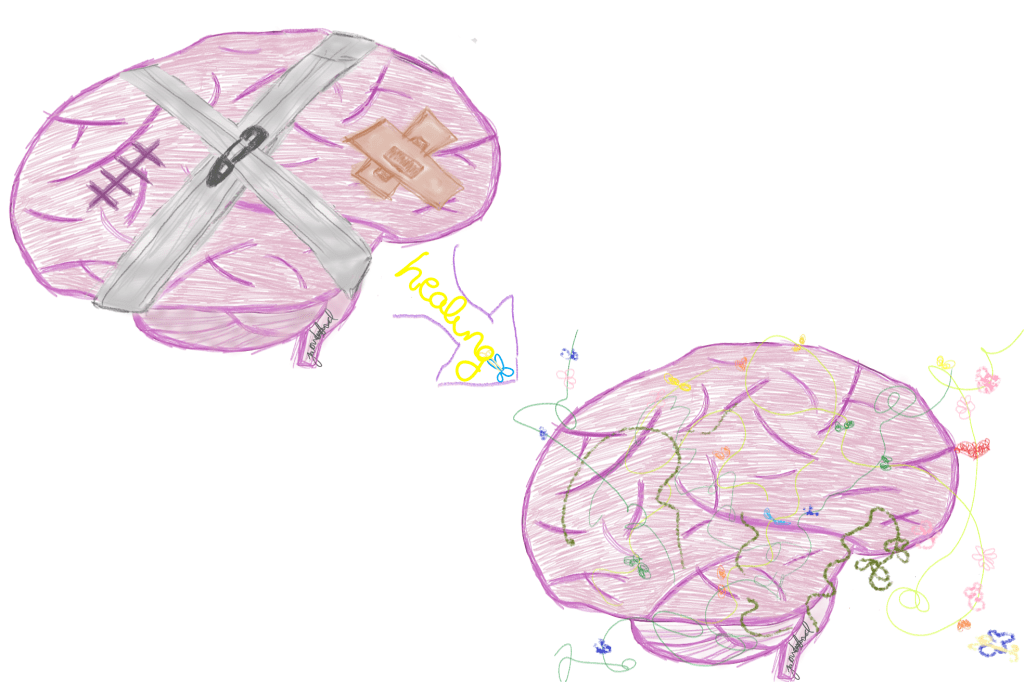
You recovered because your brain slowly, unevenly, relearned regulation. Because the episode loosened its grip. Because you accepted help even when you couldn’t articulate what was wrong.
And one day — not suddenly, not triumphantly — you noticed that being alone no longer felt dangerous. That silence didn’t scream. That you could sit with yourself again.
You live alone now.
You trust yourself now.
You know your illness now — and it no longer defines you.
I write this now not from a place of “overcoming,” but from understanding.
That version of me didn’t disappear — she integrated. She taught me how fragile the mind can be, how misleading symptoms can feel like truth, and how survival doesn’t always look active or brave.
If you are reading this from that place — or remembering yourself there — know this:
Your worst moments are not prophecies.
Your exhaustion is not failure.
And your life is not over because your mind is unwell.
I am here.
I lived.
And I carried you with me.

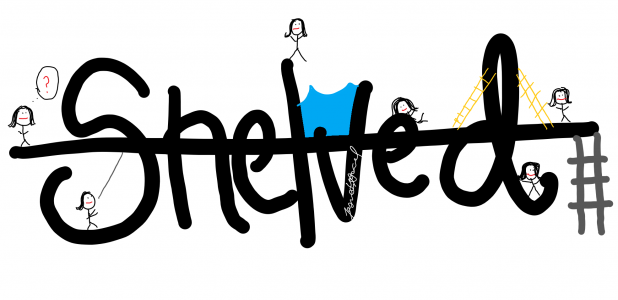
 SHELVED
Hello Jasveer,
Despite being hard hitting in parts, this is again beautifully written, so thank you for your ‘Letter’.
This ‘Letter, is you.
Very courageous to go public, sharing your mind. But I hope you feel good, when you write. I hope that it is, in some small way, therapeutic for you. It must be difficult to write when surrounded by darkness, so keep writing please.
I’ll be honest, I wasn’t sure that I should reply, that I should comment.
Needless to say I am not qualified to comment, but there is an urge within saying, yes, just reply. I owe it to the ‘Letter’ author, to reply that is.
Why? Because you have shared part of your tough story. Why? Because I hope that you want to hear what random people think, especially as you have taken the time to share your existence via the written word. Why? Well I believe that you want to share your story in the hope that you can help other bipolar sufferers, reminding them that they are not suffering in silence, perhaps.
Again, this is just me. Me from afar, thinking aloud. What can I say, whilst acknowledging that anything I say will not help as, like so many, I simply do not understand bipolar.
But, I have decided to reply.
I am replying now, trying to put myself in the position of someone (you, Jasveer) who has to endure this perennial mind fight. A daily struggle, confronting survival, even when confronted with the most simple of daily tasks and chores within your own private space, which, for the many, is just part of daily life, it’s routine existence. But for many that is impossible to face.
Your ‘Letter’ is bold, it is real, it’s very strong. It’s about you and your troublesome mind.
Having read your ‘Letter’ 2-3 times, it triggers so many uninformed thoughts and questions such as …….
Does being outside help, staring into green space for example?
Or is crossing the threshold, via the front door, the hardest step? I guess it probably is sometimes. Always, possibly.
For a non-sufferer, it’s a vulnerable place, a fearful place, being outside amongst the masses, the noise, the laughter, the hustle and bustle, the abuse, and everyone enjoying themselves. But are they really? It can be a threatening and claustrophobic place outside. But your ‘Letter’ warns of ‘exposure is danger’. Being lonely, nobody wants to be lonely. Own time is necessary sometimes, quietness is good, but being lonely is not.
Will your old life return? What is your old life? Does it matter, your old life? Do you want it back, your old life as it was? It’s about coping and accepting where you are, I guess. The adage of ‘facing the music’.
As you rightly mention, the workplace can be terrifying, either being in the room, or even online in the virtual meeting room where it is a different type of chat. The workplace is competitive. Noisy. Just noise. Lots of loud people where performances are taking place all around you. There is nowhere to hide, nowhere to escape to.
I cannot imagine the fear of waking up. That feeling, not knowing what happens next. Confronting the day, confronting darkness. Perhaps one has an element of control when asleep. I don’t know, obviously.
The ‘beautiful mind’, does it actually exist? What is the ‘beautiful mind’? And what is the opposite of the ‘beautiful mind’?
What makes you smile? I hope that you’re able to smile, but maybe not all the time.
I have many lived experiences, both professionally and private, but I do not know anyone who is bipolar. Or if I do, I do not know that they are a sufferer because they have not told me. But my brother has struggled with his mental health for his entire adult life. That daily fight, fighting for survival. The darkness. He suffers from psychosis and schizophrenia. He is very open with me, when we talk. I listen and listen. I can’t imagine being in that space, his space. I’m lucky, he’s not.
Please don’t feel obliged to acknowledge my ramblings, let alone answer the random questions | thoughts | comments outlined above above.
Just carry on writing please, if you can. You’re good at it, very creative. Perhaps, you might want to write a book one day, fiction or non-fiction or both, but no pressure. It’s your shout, of course.
I hope that better days are coming for you.
And now I’ve written a ‘letter’, but a less poignant one and less beautiful one compared to your ‘Letter’!
Stay safe, Jasveer.
LikeLiked by 1 person